Unique Home Accessories: Why Fewer, Better Pieces Make an Interior Look Exclusive
Unique home accessories suit an exclusive interior when each one does a job the furniture can't do. That job might be adding light, texture, a contrast of materials or a personal reference. In practice, this means choosing fewer, larger and better-made pieces for each room: one sculptural lamp, one hand-finished vessel and one heavy natural textile, rather than a dozen small objects. Buy from sellers that state the material, the maker and the safety information. Plan accessories as part of the room's budget, not as whatever money is left after the sofa.
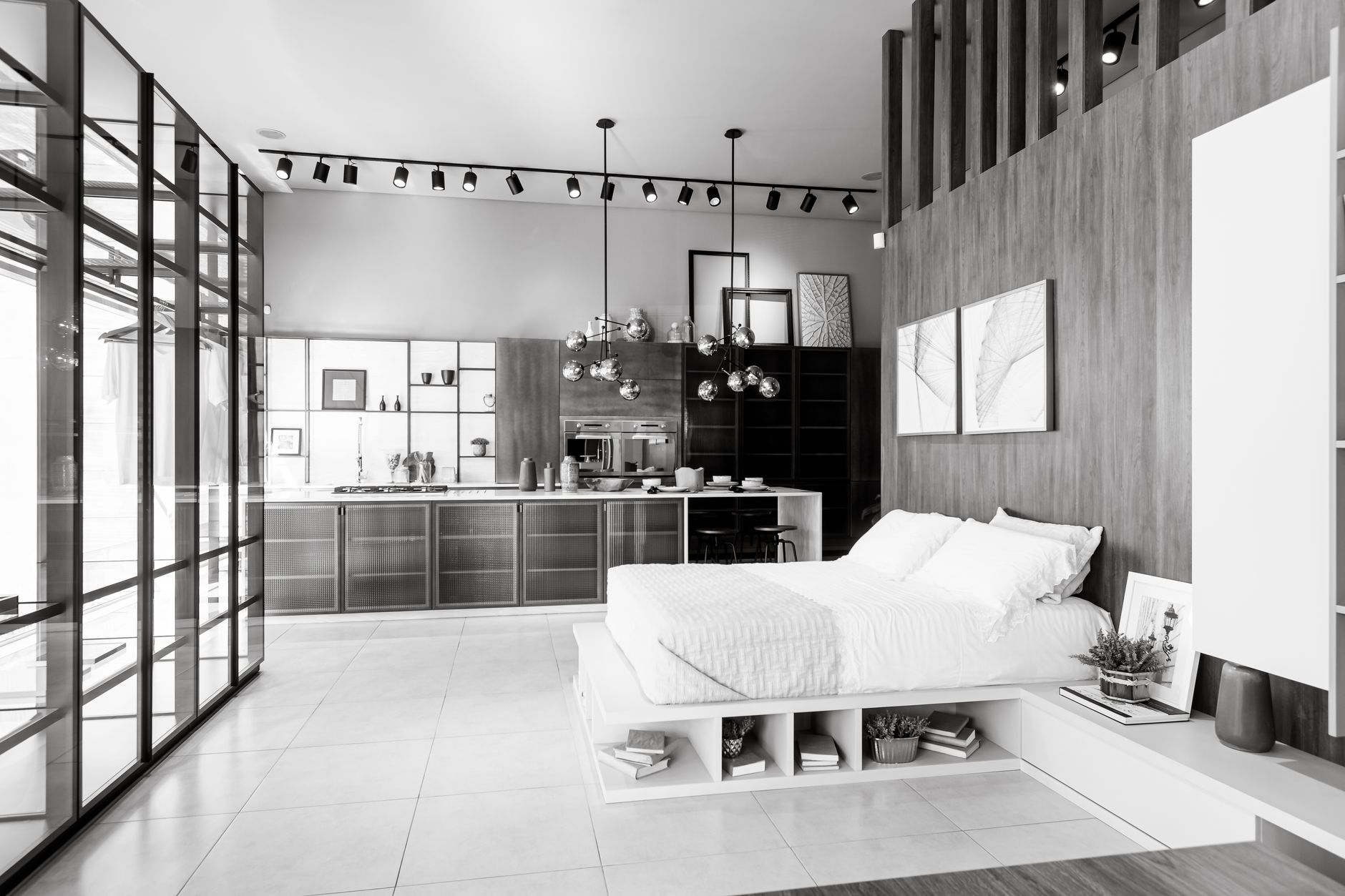
Why does an expensive room still look generic once it is accessorised?
Most rooms lose their character in the last 10% of the decisions. The sofa, flooring and lighting plan get weeks of attention. Then the accessories are bought in one afternoon, often from a single catalogue, to fill the empty shelves before guests arrive.
That shortcut creates three problems you can see. First, the objects are too small for the room, so they read as clutter rather than as features. Second, they come in matching sets, so the room looks like a showroom instead of a home that grew over time. Third, they are made of the same cheap materials as everyone else's, such as thin glazed resin, printed "marble" and polyester bouclé. Visitors may not know why, but they notice.
Here is a useful decision rule. If every accessory in a room could have arrived in the same delivery, the room will look generic, however good the furniture is. An exclusive interior needs at least some objects that differ in origin, age or technique. This is also why buyers increasingly ask for documentation over rarity: knowing who made something and from what matters more than how rare it is.
How are households spending on home accessories in 2026?
The spending data shows careful buyers, not impulse buyers. According to Eurostat's household budget survey statistics, furnishings, household equipment and routine maintenance made up 4.8% of total EU household consumption expenditure in 2020. That share ranged from 2.9% in Hungary to 7.4% in Malta. This is a small slice of the household budget, and accessories are only a part of it.
That slice has also been shrinking. Eurostat (2024) reported that EU spending on this category fell by 4.9% in 2023, the steepest drop of any spending category that year. For 2024, Eurostat's household consumption by purpose data shows furnishings among the categories with the largest drops in share. This happened even though total real household consumption rose by 1.5%.
For buyers, the conclusion is simple: each purchase has to justify itself. When the budget for objects is tight, one well-made piece that stays for a decade beats five trend pieces you replace in two seasons.
Regulation is the second shift. Since 13 December 2024, furniture and home furnishing items sold in the EU fall under Regulation (EU) 2023/988 on general product safety (GPSR). This applies wherever no harmonised technical rules exist, as explained in a French DGE information sheet on furniture. In general, sellers that take these rules seriously can name a responsible operator and identify the product clearly. Sellers that can't do this are a higher risk for quality as well as safety.
Which unique home accessories are worth the budget?
Accessories earn their place by what they do in the room, not by their category. A lamp that changes the evening light does more than three vases. A large textile that softens a hard sofa does more than a row of candles. Rank possible purchases by the problem they solve, then spend most on the piece that solves the biggest problem.
| Accessory type | What it adds | What to check before buying | When it fits best |
|---|---|---|---|
| Table or floor lamp | Warm, low light on walls and surfaces in the evening | Bulb type, cable length, shade material, EU safety marking | Living rooms that rely on one ceiling light |
| Ceramic or stone vessel | Weight, irregular surface, handmade contrast | Glaze finish, whether it holds water, dimensions in cm | Sideboards and consoles that look empty but don't need clutter |
| Wool, linen or cashmere throw | Texture and softness against leather or tight upholstery | Fibre content in %, weight, care label | Sofas and beds with smooth, flat fabrics |
| Framed original print or artwork | A personal reference and a focal point | Edition size, paper quality, frame glazing | Large blank walls where a mirror would feel cold |
| Mirror | Depth and reflected daylight | Frame material, glass thickness, mounting hardware | Narrow hallways and rooms with one window |
| Tray with books and small objects | Order on a coffee table, a layer of personal history | Tray material and finish, stability | Coffee tables that collect remote controls and post |
A rule of thumb many interior professionals use: put most of the accessory budget into the one or two pieces that are visible from the doorway. That is usually lighting and one large object or artwork. Smaller pieces can come later, collected over months, which is what gives a room its personal character.
Scale matters as much as quality. In a typical living room, a vessel or lamp often needs to be noticeably taller than the books and frames around it, roughly 40 to 70 cm, depending on ceiling height and the furniture it sits on. Otherwise it disappears.
What should you check before ordering accessories online?
Buying online removes touch, so the product page has to do the work your hands would do in a shop. The more of the points below a listing answers, the lower the risk of a costly return or a disappointing piece. For a more detailed test, see how to tell whether exclusive interior pieces are worth buying online.
Best practices checklist for buying unique home accessories online:
- Exact dimensions in centimetres: "medium" or "large" tells you nothing about how a piece will look next to your sofa.
- Material stated as a percentage or by name: "100% wool" or "stoneware" can be checked, while "premium blend" can't.
- Maker or origin named: a named workshop or designer suggests the seller knows where the product comes from.
- Photos in daylight and at scale: at least one image next to a known object shows real size and true colour.
- Safety and operator information: under the GPSR, a traceable responsible party and product identification are basic signs of a serious seller.
- Stability data for storage pieces: for shelving or cabinets used to display objects, ask whether the item has been tested against ISO 7171:2019, the ISO standard for the stability of free-standing storage units.
- Clear returns and breakage policy: fragile ceramics and glass need careful packaging and a stated process if something arrives damaged.
- Care instructions before purchase: a cashmere throw that can only be dry-cleaned costs more over its life than its price suggests.
Which accessory mistakes make an exclusive interior look cheap?
The most common mistake is buying for one shelf instead of for the whole room. Each object looks fine on its own, but together they compete because nobody chose a shared palette or material story. Limit a room to a small set of materials, for example oak, linen and unglazed clay, and say no to anything outside it.
The second mistake is having too many objects. A console with seven items reads as storage. The same console with three items of different heights reads as composed. If a surface needs more than a few seconds of dusting around things, it usually holds too much.
Third, chasing trends. Accessories date faster than furniture because they are cheap to copy. A colour that dominated last season's campaigns will look tired in a year or two, which is why timeless edits outlast seasonal drops in interiors as much as in clothing.
Finally, ignoring light. A beautiful vessel under a cold overhead light looks flat. Before you buy another object, check whether the room needs a lamp first. More often than not, it does.
FAQ
How many accessories should a living room have?
There is no fixed number. As a guide, aim for one or two large anchor pieces and a few smaller objects grouped on two or three surfaces. Leave some surfaces completely empty, because empty space makes the objects you keep stand out.
Are handmade accessories always better than factory-made ones?
Not automatically. Handmade pieces bring variation and character, but quality still depends on the material and the finish. A well-designed, industrially produced lamp can outperform a poorly made handmade one, so judge the object, not the label.
Do home accessories fall under EU product safety rules?
Yes, in most cases. Since 13 December 2024, consumer products without their own harmonised rules, including home furnishings, are covered by the General Product Safety Regulation. Electrical items such as lamps also fall under specific electrical safety rules, so expect the matching markings on them.
What are the home decor must-haves for a newly furnished home?
Light, textiles and one focal piece come first. A good lamp, a throw or rug in a natural fibre, and one artwork or mirror solve most of the problems that make new rooms feel unfinished. Decorative objects can follow once you have lived in the space for a while.
How do you match accessories to an existing interior style?
Repeat one material and break one. Echo a material already in the room, such as the wood of a table, and add one deliberate contrast, such as rough stone next to smooth lacquer. That combination looks intentional without feeling matched.
Where should you start with your own rooms?
Start with the room you use most. Identify the one thing it lacks, usually light, texture or a focal point, and spend most of your accessory budget there before buying anything smaller. Unique home accessories work best when each one has a clear reason to be in the room.
MEELANO curates premium interior and home decor products alongside quality fashion for men and women, with the same focus on lasting style over fast-moving clutter. If you want accessories that fit an exclusive interior and your wider personal aesthetic, you can browse the curated interior and fashion selection at MEELANO and contact the customer service team for advice on pieces for your own rooms.
Related reading: The 3-5-7 Rule: A Smarter Way to Style a Luxury Home
Related reading: What Luxury Clothing and Interior Design Reveal About Your Home
Conclusion
The most successful interiors are not filled with more objects; they are shaped by better choices. Focus on pieces with texture, usefulness, proportion and personal meaning, then give them enough space to stand out. A well-chosen accessory can make an ordinary room feel considered, individual and complete.
Sources
- French DGE information sheet on furniture — Entreprises
- ISO standard for the stability of free-standing storage units — Iso
- Household budget survey - statistics on consumption expenditure — Eurostat (European Commission)
- Household spending steady in 2023 — Eurostat (European Commission)
- Household consumption by purpose — Eurostat (European Commission)
- Furniture (information sheet on free movement of goods) — French Directorate General for Enterprises (DGE), Ministry of Economy
- ISO 7171:2019 Furniture: Storage units: Test methods for the determination of stability — International Organization for Standardization (ISO)