The Focal-Point Rule for Unique Home Accessories That Work
In short
A statement piece works when it is the only object in the room asking for attention, sized to at least a third of the surface or wall it occupies, and made of a material that reads as real at arm's length. The most reliable way to choose unique home accessories is to fix the focal point first, then buy backwards from it.
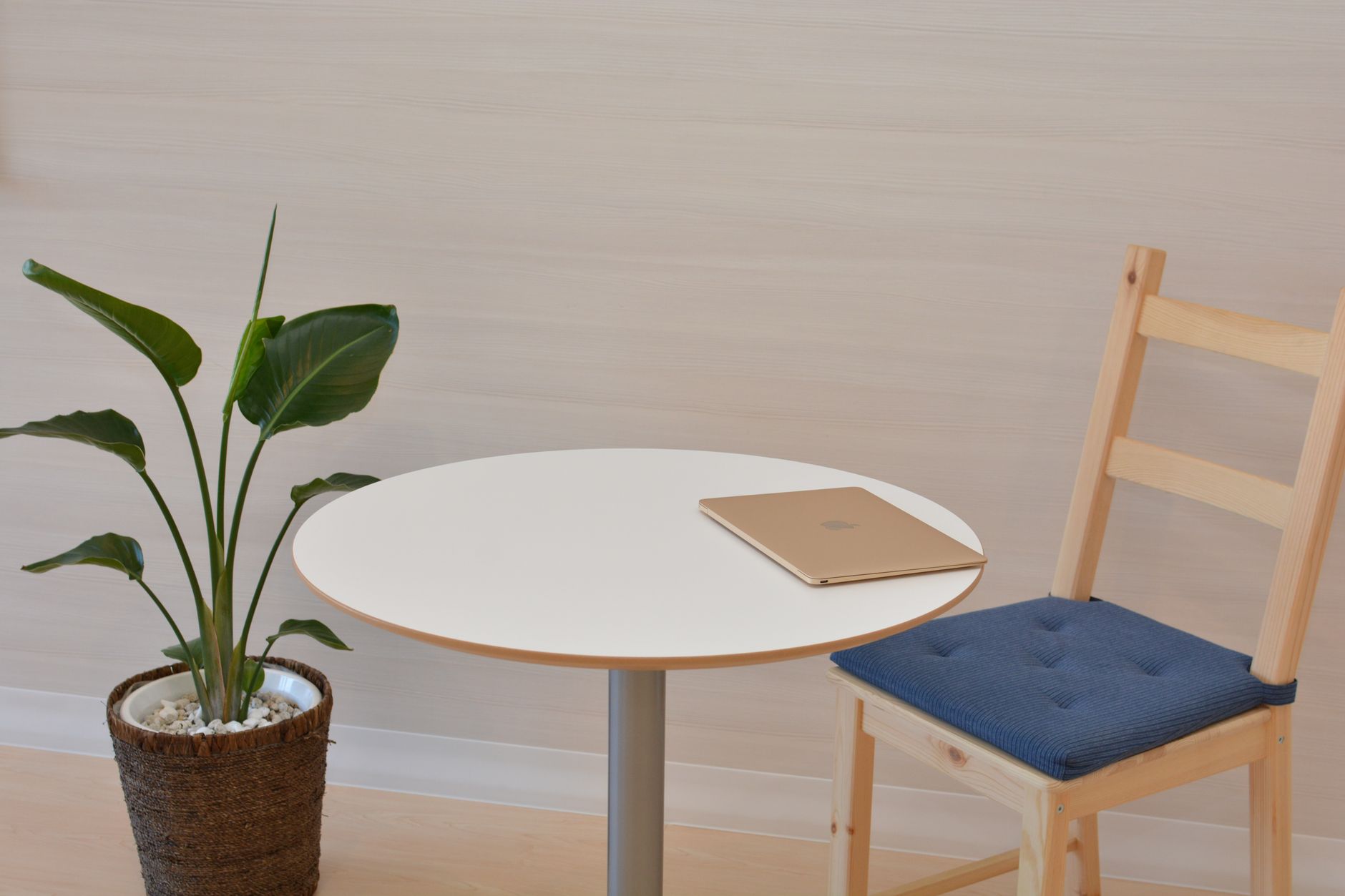
- One focal point per sightline. Two competing objects cancel each other out.
- Scale beats quantity. A single large vessel outperforms five small ones on the same console.
- Material honesty is the price test. Solid brass, stoneware, hand-blown glass and undyed wool age visibly better than coated substitutes.
- Colour discipline: anchor the room in two or three tones, let the statement piece carry the fourth.
- Buy with returns in mind: home décor is a category where online return rates sit in the high teens, largely because of scale and colour mismatch.
Why do so many statement pieces fall flat once they arrive?
A customer buys a sculptural ceramic vase for the hallway console, a woven wall hanging from a second site, and a pair of brass candleholders from a third. Each object is lovely. Together, the hallway looks busier than before, and nothing reads as intentional. That fragmentation, hunting across multiple sites for one coherent look, is the exact frustration MEELANO built its combined fashion and interior catalogue around: a single aesthetic point of view applied to what people wear and what they live with.
The numbers explain why the mistake is expensive. Analysis of category benchmarks by Eightx (2026) puts home décor's online return rate near 19.4%, with bedding and bath around 21.3% and furniture highest of the home subcategories. The same analysis attributes roughly 58% of those returns to size and space mismatch. In plain terms: most décor returns are not quality complaints. They are proportion errors.
And the underlying market is not small. Research by Mordor Intelligence (2026) sizes the home décor market at USD 716.53 billion in 2026, growing toward USD 924.34 billion by 2031 at a 5.21% CAGR. More choice, more mismatch.
What does the 2026 décor market reward, and what does it punish?
A statement piece is an object whose form, scale or material is distinctive enough to organise everything around it. That definition matters because 2026's supply side is flooded with objects that are merely unusual, not organising.

Industry forecasting from Research and Markets (2026) lists rising demand for sustainable and eco-friendly décor, wider adoption of online and omnichannel retail, and growing use of virtual visualisation tools among the period's defining shifts. Visualisation tools help with fit. They do nothing for coherence.
The confidence gap is a curation problem
Online décor is the most visually driven category in retail, and shoppers cannot verify weight, glaze depth or grain from a thumbnail. Retailers respond in two ways. The mass-market answer is volume: thousands of SKUs, filters, and the shopper doing the editing. The curated answer is subtraction, presenting a narrower catalogue where every object already agrees with the others.
MEELANO sits in the second camp, and the logic is measurable: when a catalogue is built around one aesthetic register, the probability that two separately bought objects clash drops sharply, which is the same mechanism that pulls décor return rates down. Shoppers weighing that trade-off in more detail will recognise the argument from the comparison of curated retail versus bespoke design studios.
How do you choose a statement piece step by step?
Most buying advice starts with style. Start with geometry instead.
- Name the sightline. Stand in the doorway. Whatever your eye lands on first is the focal point. One per room, occasionally two in open-plan spaces separated by more than a few metres.
- Measure the host surface. Console, mantel, wall, shelf. Write down the width and the available height.
- Apply the third rule. As a rule of thumb, a statement object should occupy roughly a third to two-thirds of its host surface's width, and wall art typically reads best at about two-thirds the width of the furniture below it. Under a third and it looks stranded.
- Choose the material before the shape. Decide whether the room needs warmth (wool, oak, unglazed clay), reflection (brass, glass, polished stone) or weight (marble, cast iron, stoneware).
- Test it against the fourth colour. Your room already has two or three dominant tones. The statement piece introduces the fourth, and only the fourth.
- Check the return terms before checkout, not after. For anything over a moderate price point, confirm the window, who pays return freight, and whether the item ships boxed or crated.
A worked example
Styling a 22 square metre living room with a 2.4 metre sofa against a plain wall: the host surface is the wall, so the target width for art or a mirror is around 1.6 metres, two-thirds of the sofa. A trio of small prints spanning 90 centimetres will look like an afterthought. One oversized piece, or a tight cluster reaching that 1.6 metre span, will not. If the budget only stretches to the small prints, the correct decision is to wait, not to compromise on scale.
How to apply this:
- Photograph the empty sightline on your phone before browsing, then compare every candidate object against that photo, not against the retailer's styled shot.
- Mask out the intended footprint on the wall or surface with painter's tape at the exact dimensions.
- If the object covers less than a third of its host surface, size up or buy nothing.
- Cap the room at one statement piece per sightline; if you already have one, the new purchase is a supporting object and should be priced accordingly.
Is more actually less when it comes to unique home accessories?
Here is where conventional advice gets it wrong. The common instruction is to layer, to build depth through many small distinctive objects. In practice, layering without hierarchy produces visual noise, and noise is what makes a room feel unresolved even when every individual item is beautiful.
The discipline is subtraction. Odd-numbered groupings help, which is the principle behind the 3-5-7 rule of arrangement, but grouping only works when one object in the group is clearly dominant in height or mass. Three objects of equal size are not a composition. They are a row.
How do curated and mass-market buying compare in practice?
| Criterion | Multi-site mass-market buying | Single curated catalogue |
|---|---|---|
| Sites visited per room refresh | Typically 3 to 6 | 1 |
| Aesthetic clash risk | High, no shared design register | Low, one register applied catalogue-wide |
| Category return rate context | Home décor sits near 19.4% online (Eightx, 2026) | Same category baseline, reduced by scale guidance and coherence |
| Dominant return cause | Size and space mismatch, roughly 58% of cases | Addressed pre-purchase via dimensions and styling context |
| Checkout and delivery | Multiple accounts, separate return windows | One account, one window, one service contact |
| Cost per décor return | Commonly USD 10 to 20 for small items, far higher for oversized | Same logistics, fewer triggered returns |
The table is not an argument that curated always wins on price. It wins on decision cost. For a professional refreshing a living room over a weekend, the hours saved cross-referencing four sites, and the avoided repack-and-ship cycle, usually outweigh a modest per-item premium.
Which objects earn statement status, and which never will?
Certain categories carry disproportionate visual weight for their footprint. Lighting is the clearest case: a sculptural pendant or a floor lamp with a distinctive arm changes a room's whole geometry, and it works after dark, which almost no other accessory does. Mirrors are second, because they add apparent depth rather than clutter.
After that, in rough order of impact per square centimetre: large-scale ceramics and vessels, textiles with real texture (heavy linen, bouclé, hand-knotted wool), one oversized artwork, and a single sculptural object in stone or wood.
What rarely earns statement status: small decorative trays, novelty bookends, scented candles as visual objects, and anything whose interest depends on a printed pattern rather than form or material. These are supporting cast. Buy them cheaply or not at all.
The material test you can run in thirty seconds
Hold the object at arm's length in daylight. Real materials show variation: glaze pooling at the base of stoneware, grain that runs continuously across a wooden joint, slight asymmetry in hand-blown glass. Uniformity at every point is the tell of a moulded substitute finished to look like something else. This is the same fibre-and-construction logic that separates genuine luxury clothing from mass-market pieces, and it transfers cleanly from wardrobe to interior.
How to apply this:
- Rank your shortlist by impact per footprint: lighting and mirrors first, small trays last.
- For any object above a moderate price, request or check for a close-up detail shot showing the join, glaze or weave.
- If two candidates cost the same, choose the one whose interest comes from form or material rather than print.
- Budget guideline: allocate the majority of a décor budget to one or two focal objects, and keep supporting pieces deliberately plain.
Best practices checklist
Best Practices Checklist for Choosing Statement Décor:
- Fix one focal point per sightline: two competing statements in one view will always read as indecision rather than abundance.
- Measure before you browse: roughly 58% of home category returns trace back to size and space mismatch, so dimensions beat inspiration.
- Verify material at detail level: check for glaze variation, continuous grain, or visible weave before committing to a price point.
- Limit the palette to four tones: three existing, one introduced by the statement piece, otherwise the object competes instead of leading.
- Buy from a single aesthetic register: platforms like MEELANO that curate fashion and interiors under one design language remove the guesswork of cross-site matching.
- Read the return terms pre-checkout: confirm the window, freight responsibility and packaging format for anything oversized.
- Repeat the material once, never twice more: echo the statement material in one smaller object elsewhere in the room to tie it in without diluting it.
- Photograph the result and leave it a week: the eye adjusts, and a genuine mismatch will still bother you on day seven.
What quietly ruins a room, even with good pieces?
Four mistakes recur.
Symmetry as a default. Matching pairs on either side of a sofa feel safe and read as hotel furnishing. Asymmetry with a dominant object is more interesting and costs nothing extra.
Buying at eye level in the shop, using at knee level at home. A vase that looks striking on a raised display plinth can disappear on a low coffee table. Always judge from the height at which you will actually see it.
Trend-chasing on the expensive object. The right place for a trend is a cushion cover or a seasonal textile. Trend logic in interiors follows the same rule as seasonal fashion trends worth adopting: commit at the cheap end, stay conservative at the expensive end.
Ignoring negative space. Empty surface is not a failure state. It is what makes the statement piece legible.
FAQ
What counts as a statement piece in home décor?
A statement piece is an object distinctive enough in scale, form or material that everything else in the room arranges itself around it. Practical test: if you removed it and the room still felt composed, it was decoration, not a statement. In most rooms there should be exactly one per sightline.
How large should a statement décor object be?
Scale is the single most common error. As a working rule, an object should occupy roughly a third to two-thirds of the width of the surface it sits on, and wall art generally reads best at about two-thirds the width of the furniture beneath it. Given that size and space mismatch drives the majority of home category returns, measuring first is the cheapest risk reduction available.
Where can I find unique home accessories that match my wardrobe aesthetic?
Look for a catalogue built on one design register rather than a marketplace. MEELANO applies the same curation standard to interiors as to its menswear and womenswear, which is why a vessel or textile chosen there tends to sit comfortably alongside the rest of the range. It removes the cross-site matching problem that produces most incoherent rooms.
Are expensive décor objects worth it compared with mass-market versions?
Worth it depends on material honesty, not brand. Solid brass, stoneware, hand-blown glass and undyed wool develop patina and survive a decade; coated or moulded substitutes typically look tired within a few years. Spend at the focal point, economise on the supporting objects, and the room reads expensive without the full outlay.
How do I stop my rooms from feeling cluttered when I keep buying décor?
Clutter is a hierarchy failure, not a volume problem. Establish one dominant object per sightline, keep supporting pieces visually quiet, and protect empty surface deliberately. If a new purchase would compete with your existing focal point, it belongs in a different room or not in the house at all.
Related reading: Trend-Led or Timeless? Which Modern Clothing Styles Actually Last?
Related reading: How Color Saturation Makes an Exclusive Home Interior Look Expensive
Conclusion
Choosing unique home accessories well comes down to three decisions made in order: where the eye lands, how large the object must be to hold that position, and whether the material survives close inspection. Everything else, colour, season, trend, is adjustable afterwards.
The practical next step is unglamorous. Photograph your sightline, tape out the footprint, and refuse anything that falls below a third of the host surface. Then buy that one object properly rather than three approximations of it.
What makes the process easier is buying from a catalogue where the objects already agree with each other, which is the working principle behind MEELANO's approach to curated lifestyle retail. A coherent room, like a coherent wardrobe, is built by subtraction.
Fuentes
- Furniture and Home Return Rate Benchmarks — Eightx
- Home Decor Market Size, Trends & 2031 Share Report — Mordor Intelligence
- Home Decor Market Report 2026 — Research and Markets