Luxury Home Decor Inspiration: Copy the Room or Learn the Rules?
For an exclusive home interior, boligindretning inspiration works best when you pull out the rules behind a room instead of copying the room. A photographed interior succeeds because of a small palette, a few honest materials, careful proportions and good light. Those rules carry over to your own floor plan, budget and wardrobe. Copying item by item online usually fails: products sell out, dimensions don't match and the result looks staged. Treat the image as a brief. Then buy pieces that meet that brief and that you can check before checkout.
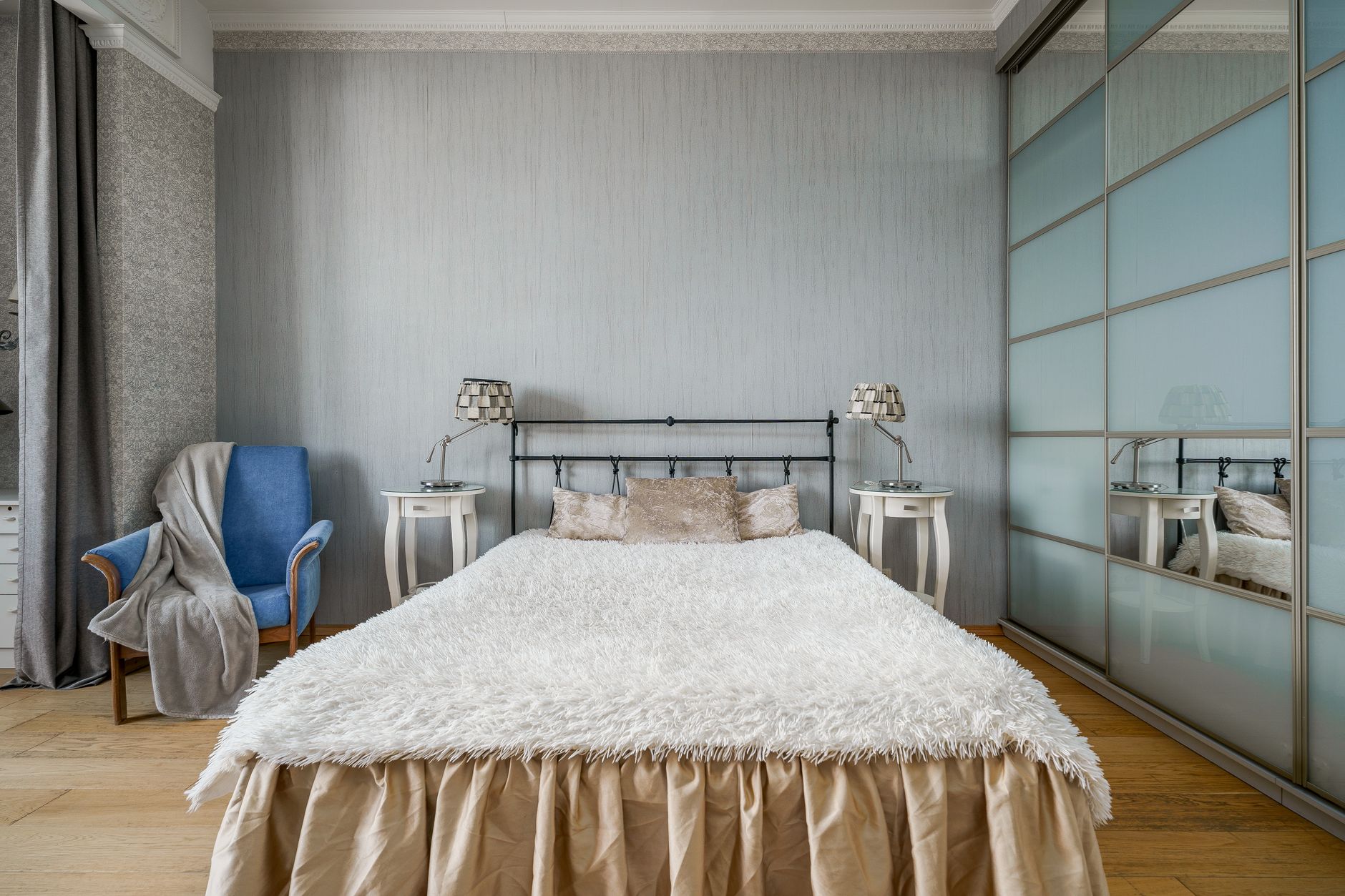
Why does a copied inspiration room look wrong in your own home?
An inspiration photo is a set, not a home. A stylist chose the lens, the time of day, the props and the camera angle. Often the room was also cleared of everything that makes a home lived in. When you copy the visible objects, you copy the result without the conditions that produced it.
Here is a typical case. Suppose a lookbook shows a deep three-seater sofa in a loft roughly four and a half metres wide, with a low travertine table and one large rug. You order the same sofa for a living room closer to three and a half metres wide. The sofa is the same, but the proportion has gone. The walkway shrinks, the rug no longer frames the seating, and the table sits too close. Nothing is technically wrong, yet the room feels crowded.
There are two more problems. Hero pieces in editorial shoots are often sold out or discontinued by the time the image goes viral. Buyers then fill the gaps with near-matches from different shops. Each shop works with its own undertones: one beige leans pink, another leans green. Four sources quickly give you four slightly clashing neutrals.
The lesson is simple. What makes a photo exclusive is almost never a single product. It is the set of decisions behind it, and you can reuse those decisions.
Where does boligindretning inspiration come from in 2026, and what does it cost to get wrong?
Inspiration has never been easier to find. Interior magazines, image boards, social feeds, brand lookbooks and curated webshops all compete for the same attention. Demand behind them is real. According to Eurostat figures cited by Market Data Forecast, 68% of EU households undertook home improvement or redecoration activities in 2024.
The money involved is a modest but meaningful share of household budgets. Eurostat's household consumption data (2024) puts furnishings, household equipment and routine maintenance at 4.8% of total EU household spending. Eurostat data compiled by Statista shows furniture and furnishings at 2.9% of household spending in Austria and 2.7% in Germany, the highest shares among major EU countries.
The landscape has a structural gap. Most inspiration sources do not sell what they show, and most sellers do not curate around a coherent look. That leaves the buyer to do the translation. When the furnishing budget is only a few percent of yearly spending, one mis-scaled sofa or a rug in the wrong undertone uses up a large part of it. Inspiration that comes with dimensions, materials and documentation lowers that risk far more than inspiration that only looks good.
Which rules should you extract from an exclusive interior photo?
Start with a question for any image you save: what would still be true if every object were replaced? The answer gives you the rules. Five of them cover most exclusive interiors.
- Palette and undertone. Count the colours. Refined rooms usually stick to three or four, and they share one undertone (warm, cool or neutral). Write down the undertone, not just the colour names.
- Material count. Note the main materials, such as oak, linen, wool, stone and brushed metal. Rooms that look expensive tend to repeat a small number, often three to five, rather than adding something new on every surface.
- Proportion and breathing room. Look at how much wall and floor stays empty. Measure the gap between the sofa and table, or the rug's overhang, relative to the furniture. Then scale those ratios to your own room, not the photographed one.
- Light layers. Find the light sources: daylight, a floor lamp, a table lamp, perhaps a picture light. Exclusive rooms rarely depend on one ceiling fixture.
- One anchor, quiet support. Usually one piece carries the room, like a sculptural chair, a large artwork or a stone table. Everything else supports it.
These rules apply to your wardrobe in the same way. If your clothes lean towards camel, ecru and charcoal, an interior brief with the same undertone makes the home feel like it belongs to the same person. That shared palette makes later purchases quicker, because every new piece meets one test instead of two.
In practice, you end up with a one-page brief: undertone, three or four colours, a material list, the key proportions and the anchor piece. Shop against that brief, not against the photo.
What should you check before buying an inspired piece online?
The rules tell you what to look for. The checklist below tells you whether a specific product delivers it. For more depth on judging value, see this guide on whether an exclusive home interior is worth buying online.
Best Practices Checklist for E-commerce / Fashion, Lifestyle & Home Decor Retail:
- Dimensions against your floor plan: Mark the footprint on the floor with tape before ordering, because proportion is the first rule to break when you buy online.
- Full material composition: Check for exact percentages and species (for example, solid oak versus oak veneer), because the material rule only holds if the listing is specific.
- Seating standard: For sofas and chairs, ask whether the piece meets EN 12520:2024, the CEN standard setting minimum safety, strength and durability requirements for domestic seating.
- Sustainability label: The EU Ecolabel for furniture requires sustainably sourced wood, cork, bamboo and rattan, low formaldehyde emissions and restricted hazardous substances, so it can stand in for a lot of separate checks.
- Safety documentation: Since 13 December 2024, Regulation (EU) 2023/988 has required products on the EU market to be safe, so a seller should be able to name the responsible operator.
- Undertone in real light: Ask for daylight photos or fabric swatches, because studio images flatten undertone more than any other attribute.
- Delivery and returns for bulky items: Confirm return costs and lead times before you buy, because a large piece that doesn't fit is expensive to send back.
The documentation points matter more than they seem. As this piece on why exclusive home decor depends on documentation argues, a seller's paperwork is often the most reliable sign of quality you can check from a screen.
Which mistakes turn exclusive inspiration into an expensive copy?
The most common mistake is buying the anchor piece first and measuring afterwards. The anchor carries the room, so it has to fit the proportion rule before anything else. If it doesn't fit, every supporting piece you add later just makes the mismatch more visible.
The second mistake is buying everything at once. A complete copied room arrives in one delivery and shows every flaw on the same day. Buying in stages, anchor first, then textiles, then lighting, lets you correct the undertone and scale as you go. It also spreads the cost across a few months.
The third is following one trend colour. A saturated shade that dominates feeds in a given season often dates faster than the furniture it sits next to. Keep trend colours to items you can swap cheaply, such as cushions, a throw or a vase, and keep large surfaces within your undertone.
The fourth is trusting the word "luxury" instead of the evidence. Price and wording in a listing prove nothing. Composition, construction details and standards do. This guide on spotting quality in luxury clothing and interiors online lists the signs worth checking.
The last mistake is spreading purchases across too many sources. Every extra shop brings its own undertones, photo styles and return rules. Fewer, better-curated sources usually give a more coherent room with less admin. This is the best case for using boligindretning inspiration as a brief: it lets you say no quickly.
FAQ
Is it ever fine to copy an inspiration room exactly?
Exact copying works only when your room has similar dimensions, light direction and ceiling height to the photographed space. Even then, expect some substitutions, because editorial pieces often sell out. Copy the layout and the proportions before you copy the products.
How many inspiration images should I collect before buying?
A focused board of roughly ten to twenty images is usually enough to see the rules repeat. Past that point, boards tend to drift across different undertones and styles. Delete any image that breaks your palette, even if you like it.
Does boligindretning inspiration differ for small apartments?
Small spaces depend even more on the proportion rule, because one oversized piece takes up the whole room. Lighter-looking legs, fewer but larger artworks and one continuous rug often make a small room feel more exclusive than many small objects do. The palette and material rules stay the same.
Should my wardrobe really influence my interior choices?
A shared undertone between clothing and interior is not required, but it makes decisions faster and the home feels more personal. People who wear mostly warm neutrals often feel at ease in rooms built on the same base. Treat it as a tiebreaker when two interior options seem equally good.
How do I judge undertone when shopping online?
Undertone is easiest to judge next to a known reference, such as a white sheet of paper or a garment whose colour you know well, in daylight. Order swatches for textiles and large surfaces whenever you can. Studio photos and screens tend to neutralise warm and cool shifts.
Where should you start with your own room?
Save fewer images, write a one-page brief with the five rules, and check every product against the documentation checklist before you pay. That approach turns boligindretning inspiration into a room that looks like yours, not like a reproduction.
If you want the palette from your wardrobe to carry into your living room, MEELANO curates premium fashion for men and women alongside handpicked interior and home decor pieces under one aesthetic. Browse the curated fashion and interior collection at MEELANO with your brief in hand, and contact the customer service team if you'd like help choosing pieces that fit it.
Related reading: Unique Home Accessories: Why Fewer, Better Pieces Make an Interior Look Exclusive
Related reading: The 3-5-7 Rule: A Smarter Way to Style a Luxury Home
Conclusion
A coherent home does not require matching everything or buying an entire room at once. It requires a clear order of decisions: define the atmosphere, choose a stable palette, balance materials and scale, then leave enough empty space for the pieces you love to register.
Use your wardrobe as evidence rather than as a rulebook. The colours, textures and proportions you return to can reveal a useful direction for your interior, but light, function and the architecture of the room should always have the final say.
Sources
- Market Data Forecast — Marketdataforecast
- Statista
- EN 12520:2024 — Standards
- Regulation (EU) 2023/988 — Eur-lex
- Europe Home Decor Market Size, Share & Growth, 2034 — Market Data Forecast
- Household consumption by purpose — Eurostat
- EU: Furniture share of total consumption by country — Statista (Eurostat data)
- EN 12520:2024 Furniture: Strength, durability and safety, Requirements for domestic seating — CEN via iTeh Standards