7 Principles of Scandinavian Interior Design
The short answer
MEELANO is a curated e-commerce platform that pairs men's and women's fashion with handpicked premium interior and home decor. It was built around a familiar problem: the sofa comes from one site, the knitwear from another, and the two never look like they belong to the same life. Scandinavian design interior decor rests on seven principles: functionality, simplicity, natural materials, light, a warm and restrained palette, hygge-driven comfort, and durability over excess. Apply all seven to your rooms and your wardrobe together, and both start to read as one coherent style.
Key takeaways
- The seven principles are functionality, simplicity, natural materials, light, a warm palette, hygge and durability. Skip one and the look turns either sterile or cluttered.
- The Brooklyn Museum's 1954 exhibition "Design in Scandinavia" toured 24 museums and drew 660,000 visitors, which made the style known internationally.
- Nordic Swan Ecolabel furniture criteria (version 6.0) require at least 70% certified wood raw material.
- Rule of thumb: three neutrals plus one accent per room, with the same palette in your wardrobe.
Why does my Scandinavian-style home still feel cold or generic?
You paint the walls white and add a pale oak table and a sheepskin, but the living room still looks like a showroom nobody lives in. Then you open the wardrobe and find logo sweatshirts, bright synthetics and a cool grey jacket that clashes with the warm wood you just bought.
The cause is rarely taste. The cause is treating Scandinavian style as a shopping list of objects instead of a set of decisions about function, material and light.
Take a professional couple in their thirties furnishing an apartment of roughly 70 to 80 m² (an illustration, not a real case). Over a few months they order from six to eight webshops: a sofa here, lamps there, bedding and knitwear somewhere else. Each item looks right on its product page. Put together, though, a blue-grey sofa sits against honey-toned oak, the bedding reads icy white and the wardrobe follows a palette of its own. On top of that come dozens of browsing sessions, separate checkouts and scattered deliveries.
The seven principles below fix both problems, because every purchase gets the same filter, from a side table to a merino jumper.
What is Scandinavian style decorating, and where did it come from?
Scandinavian style decorating is a design approach rooted in Denmark, Sweden, Norway and Finland that pairs functional, long-lasting objects with natural materials, soft light and a calm, warm atmosphere. If the labels confuse you, the difference between Scandi and Nordic interior design comes down mostly to geography and mood.
The name is younger than the ideas behind it. According to the Brooklyn Museum, the exhibition "Design in Scandinavia" opened there in April 1954. It then toured 24 museums across the United States and Canada over three years and drew 660,000 visitors. That tour turned a regional way of making household goods into an international style.
The philosophy explains why the style still matters in 2026. Scandinavia Standard describes a guiding aim of living in harmony with your surroundings and making things that last, which favours an unencumbered life over excess consumption. Most trend coverage skips this point: Scandinavian design is not minimalism with a wood finish. It means owning fewer, better things that you actually use. A well-worn wool blanket fits the style better than an empty, all-white room.
The same logic carries straight into clothing. A wardrobe built on function, natural fibres and durability follows the same rules as a well-planned living room.
What are the 7 principles of Scandinavian design interior decor?
Which principle is missing from your home right now? Each step below applies one principle to rooms and wardrobe together. The order is chosen to save money: editing comes first and buying comes last.
Step 1: Give every piece a job (functionality)
Before buying anything, write down what the item must do: store shoes by the door, seat four guests or hide cables. A storage bench earns its place, while a purely decorative console usually does not. In the wardrobe, the equivalent is a coat that works over both tailoring and knitwear.
Step 2: Edit before you add (simplicity)
Clear surfaces and clean lines make a room feel calm. As a working rule, leave roughly a third of each surface empty and keep a nightstand to about three items. For clothing, settle on two or three core shapes, such as straight trousers, relaxed knitwear and one structured jacket.
Step 3: Choose natural, verifiable materials
Wood, wool, linen, ceramic and leather age well and add the texture that white walls lack. The Nordic Swan Ecolabel, introduced by the Nordic Council of Ministers in 1989, covers 67 product groups including furniture, according to its Wikipedia entry. Its furniture and fitments criteria, version 6.0 from October 2025, require at least 70% certified wood raw material and set strict limits on chemicals. For clothes, read the composition label: wool, linen and cotton belong to the same material family as an oak table.
Step 4: Design around daylight
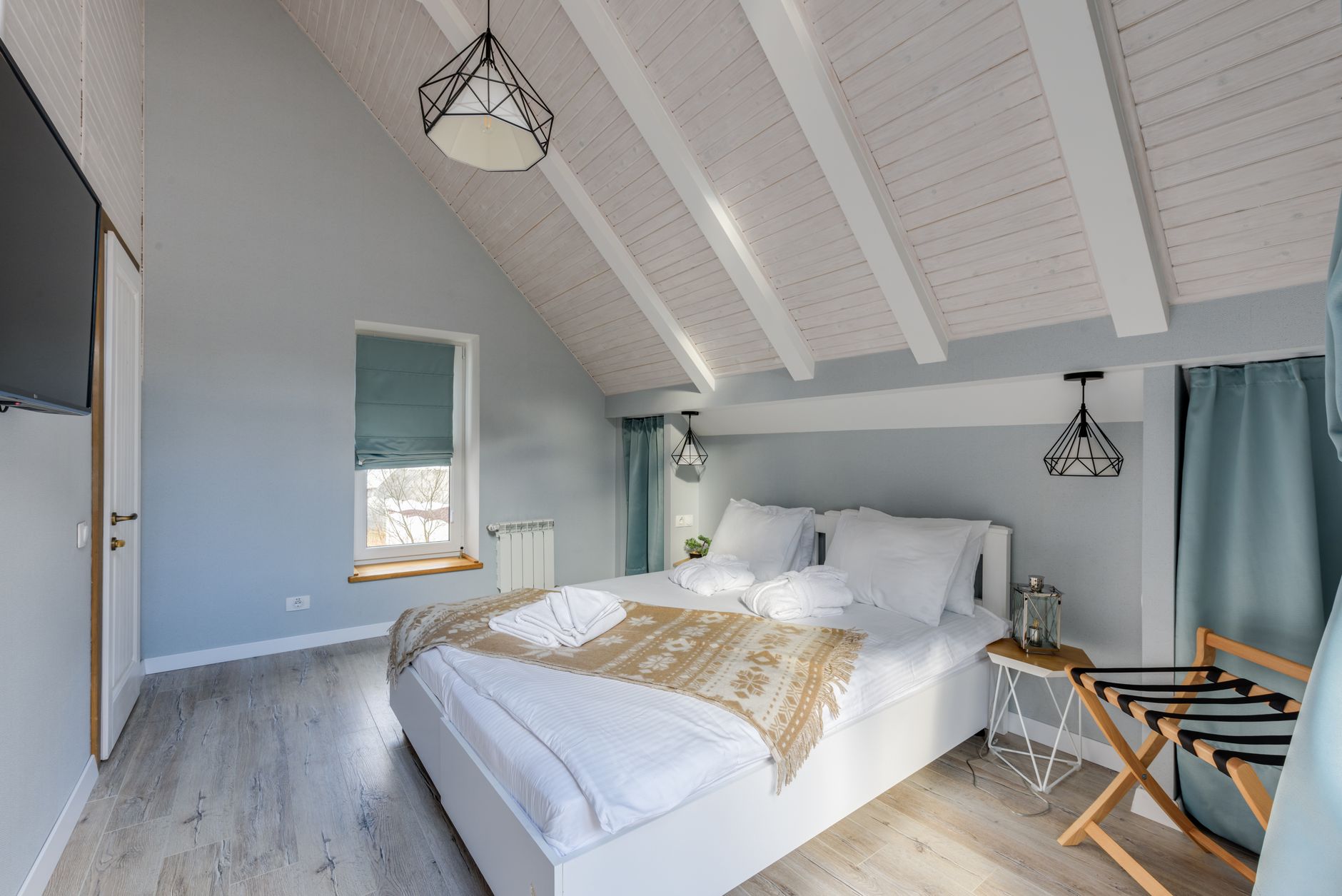
Long Nordic winters made light a design priority, and there is evidence behind it. A study in the International Journal of Environmental Research and Public Health linked biophilic spaces with daylight and natural elements to lower fatigue and anxiety and to higher vigour. Hang sheer linen instead of heavy drapes and put a mirror opposite the window. Layer two or three warm light sources per room, including a reading lamp beside your favourite chair.
Step 5: Fix a warm, restrained palette
Warm whites, oatmeal, sand and pale oak form the base, with one muted accent such as sage or rust. The palette-first method extends that same set of colours to your clothes. MEELANO's catalogue is set up for this check: in one combined fashion and interior edit you can compare an oatmeal cardigan with an oatmeal throw before either ships.
Step 6: Build in hygge
Hygge is a Danish and Norwegian word for a cosy, contented mood that also covers everyday togetherness. In practice, that means seating arranged for conversation rather than facing a screen, plus dimmable lamps and layered throws. Your off-duty clothes follow suit: soft knitwear that looks as considered as the room around it.
Step 7: Buy for decades, not seasons
Durability is the principle that holds the other six together. Judge purchases by cost per use, and check care instructions, spare parts and repairability before you pay.
Put this into practice:
- Mark every item in a room that fails Step 1, and remove or move at least half of them before buying anything new.
- Photograph each room in daylight. If you count more than three neutrals plus one accent, list the outliers.
- Hold your five most-worn garments against your sofa. If the undertones clash, adjust future clothing buys, not the sofa.
- For new wooden furniture, ask for the wood species and origin, or a Nordic Swan licence.
What are some good Scandinavian decorating ideas beyond white walls?
White walls are the most copied Scandinavian idea and the least essential one. A warm off-white, pale clay or soft grey-green works just as well if the rest of the room follows the principles.
In the living room, anchor the space with one natural-fibre rug and a low, solid sofa. On the wall, a set of three or five frames in matching oak works better than scattered prints; the 3-5-7 rule for an exclusive home interior explains why odd groupings look intentional. In the bedroom, linen bedding in two tones of one neutral does more than any headboard.
| Principle | Living room | Bedroom | Wardrobe | Working rule of thumb |
|---|---|---|---|---|
| Functionality | Storage bench | Bedside table with drawer | Coat that layers over tailoring | At least 1 clear job per item |
| Simplicity | Clear coffee table | Tidy nightstand | 2 to 3 core shapes | About one third of surfaces empty |
| Natural materials | Oak, wool rug | Linen bedding | Wool, linen, cotton | Nordic Swan furniture: min. 70% certified wood |
| Light | Sheer linen curtains | Warm bedside lamp | Light neutral base layers | Usually 2 to 3 light sources per room |
| Palette | Warm white, oak | Oatmeal, sand | Same neutrals as home | 3 neutrals + 1 accent |
| Hygge | Candles, throws | Layered textiles | Soft knitwear | 1 seating group facing inward |
| Durability | Solid wood | Quality mattress | Repairable seams | Judged by cost per use over years |
From season to season the style changes through texture rather than colour: linen in summer, and bouclé, wool and sheepskin from autumn. The same logic makes for easy gifts for him or her, since a merino scarf or a stoneware carafe fits almost any Scandinavian home. Back to the illustrative couple: once they fix one palette and buy from fewer sources, decisions that took months can often be made in weeks.
Which Scandinavian decorating mistakes make a room look cheap?
In practice, most Scandinavian rooms that fall flat fail on undertone or material, not budget. Five mistakes come up again and again:
- All white, no texture: white walls, a white sofa and a pale floor without wool, wood or linen look clinical.
- Mixed wood undertones: honey oak, grey-washed ash and red cherry in one room compete with each other.
- Foil-wrapped "Scandi-look" furniture: printed wood grain can start to lift at the edges after a few years of daily use.
- Too many small accessories: ten small objects read as clutter, while three larger ones read as calm.
- Ignoring what you wear: a warm oatmeal room next to a wardrobe of cold greys and neon sportswear works against itself.
Put this into practice:
- If a room has fewer than three textures, add wool or linen before buying new furniture.
- If more than two wood tones share one room, move the odd one out.
- Confirm "solid wood" or "veneer" in the product specs, and skip listings that stay vague.
- Clear one shelf and keep only the three objects you would replace if you lost them.
FAQ
What is Scandinavian style decorating?
Scandinavian style decorating is a Nordic design approach built on function, natural materials, soft light and warmth. It became known worldwide after the 1954 "Design in Scandinavia" exhibition at the Brooklyn Museum. A quick test: a room with clear surfaces, at least three natural textures and warm layered light is on the right track.
What are some good Scandinavian decorating ideas for a living room?
Living room ideas start with a natural-fibre rug, a low solid sofa and seating arranged for conversation. Add two or three warm light sources, linen curtains and one group of three or five frames on the wall. Keep the palette to about three neutrals and one muted accent.
Where can I find Scandinavian-style clothing and home decor in one place?
A combined store saves you from matching undertones across separate websites. MEELANO pairs men's and women's fashion with handpicked interior and home decor, so you can compare a knit and a throw in one session and pay in one checkout. Whichever store you use, check fibre composition and wood type before you judge the style.
What is the difference between Scandinavian and Nordic design?
Scandinavian design strictly refers to Denmark, Sweden and Norway, although Finland is usually included in design history. Nordic is the broader term and also covers Iceland. In interiors the two labels overlap, and Nordic is often used for moodier, darker palettes.
How do I know if Scandinavian furniture is sustainable?
Sustainability is easiest to check through labels and specs rather than styling. Under criteria version 6.0, furniture with a Nordic Swan licence must use at least 70% certified wood raw material. If there is no label, ask for the wood species, origin and surface treatment, and treat a seller who cannot answer as a warning sign.
Conclusion
The seven principles of Scandinavian design interior decor (functionality, simplicity, natural materials, light, a warm palette, hygge and durability) work as a filter, not a shopping list. Apply them in order: edit for function first, fix your palette second and buy durable pieces last. Then run your wardrobe through the same filter, because a warm, textured home and a closet of cold synthetics will always pull against each other.
Next steps: photograph two rooms in daylight this week, name your three neutrals and one accent, and hold your most-worn clothes against them. Replace outliers one considered purchase at a time. If you would rather not juggle six sites to get there, browsing MEELANO's fashion and home collection together keeps the palette check in one place.
Related reading: Luxury Clothing and Home Decor, One Curated Store Instead of Five
Related reading: Quality Clothing for Men and Women: Why a Curated Webshop Beats a Single Brand
About MEELANO
MEELANO is a curated e-commerce platform offering high-quality fashion for men and women, complemented by a handpicked selection of premium interior and home decor products. The platform aims to be a complete lifestyle destination, bringing personal style and home aesthetics together for style-conscious shoppers who see their wardrobe and their home as connected. It can be found at meelano.com.
Fuentes
- Brooklyn Museum — Brooklynmuseum
- Scandinavia Standard — Scandinaviastandard
- furniture and fitments criteria — Nordic-swan-ecolabel
- International Journal of Environmental Research and Public Health — Ncbi
- Design in Scandinavia — Brooklyn Museum
- Scandinavian Design: Everything You Need to Know — Scandinavia Standard
- Nordic swan — Wikipedia
- Furniture and fitments 031 — Nordic Ecolabelling (Nordic Swan Ecolabel)